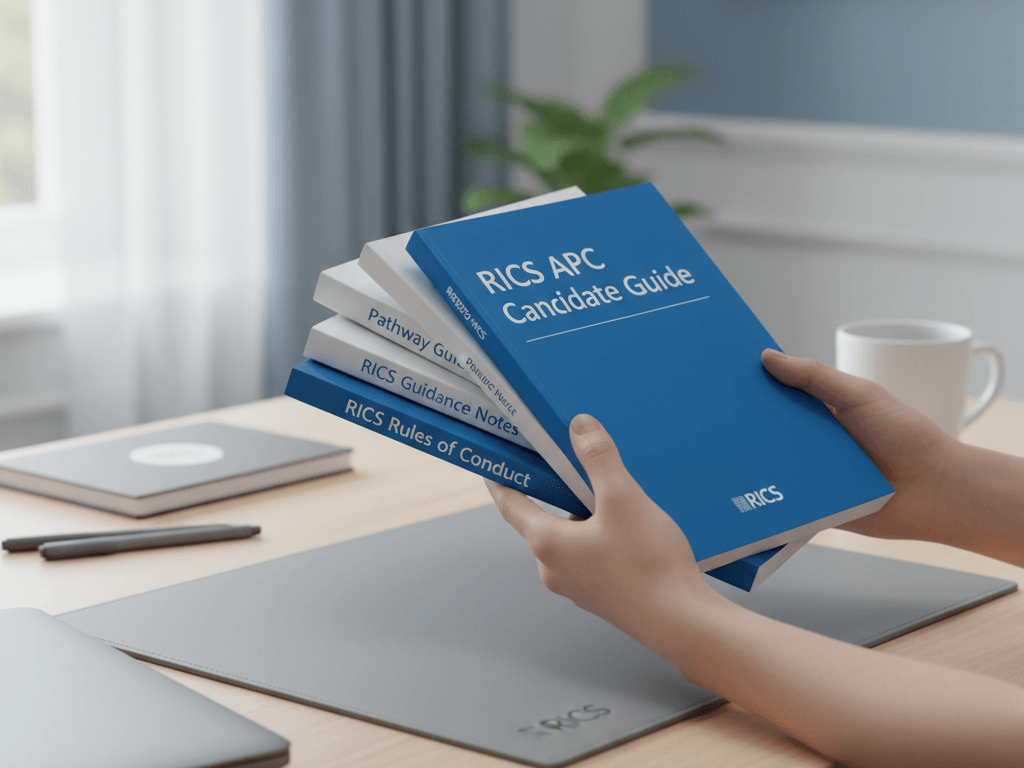
Which essential guides should you refer to for the RICS APC?
The RICS APC (Assessment of Professional Competence) is your pathway to becoming a Chartered Surveyor (MRICS), and preparation is the key to success. With numerous documents, templates, and tools available, knowing which essential guides to refer to can help you stay focused and confident throughout your journey. Here are the most important resources every APC candidate should have on hand.
✅ 1. RICS APC Candidate Guide
The RICS APC Candidate Guide is the official handbook that outlines the entire APC process from start to finish. It explains the different routes to chartership, competency requirements, submission structure, and the final assessment format. This guide helps candidates understand what is expected at each stage, offering practical advice, timelines, and submission tips to ensure a structured and informed approach to achieving MRICS status.
🔗 Download RICS APC Candidate guide directly from RICS.
📂 2. Pathway Guide (Specific to Your Sector)
Each APC pathway has its own dedicated Pathway Guide tailored to specific surveying disciplines, such as Quantity Surveying, Valuation, or Building Surveying. It details the mandatory, technical, and optional competencies required, along with explanations of what must be demonstrated at Levels 1, 2, and 3 with definitions and examples. This guide ensures candidates align their experience and submissions with the standards and expectations of their chosen professional pathway. It helps you tailor your submission to the exact expectations of your chosen pathway.
🔗 Download RICS APC Pathway guides directly from RICS.
🧑⚖️3. RICS Rules of Conduct
The RICS Rules of Conduct are a set of ethical and professional standards that all RICS members and regulated firms must follow. They cover integrity, competence, service, lifelong learning, and public interest. These rules form the foundation of professional behavior expected from RICS members and are essential for upholding the reputation and trust associated with the MRICS designation. Candidates must understand and remeber all the five rules of conduct by heart.
🔗 Download RICS Rules of Conduct directly from RICS.
📘 4. RICS Professional Standards
Professional Standards include mandatory requirements that all RICS members and regulated firms must adhere to, regardless of their geographic location or field of practice. They set a baseline expectation for competent delivery or ethical behaviour. They include practices and behaviours intended to protect clients and other stakeholders, as well as ensuring their reasonable expectations of ethics, integrity, technical competence and diligence are met. Members
must comply with an RICS professional standard. Professional Standards include documents such as Surveying Safely, Conflicts of Interest, Whole life carbon assessment for the built environment, etc. Read more about RICS Professional Standards in detail.
📄 5. RICS Guidance Notes
RICS Guidance Notes are non-mandatory but provide best practice advice on carrying out professional duties across different surveying disciplines. They help professionals interpret and apply standards in real-world scenarios, improving the consistency and quality of services delivered. These documents often include definitions, case examples, procedures, and recommended approaches, making them especially useful during the APC process. By following RICS guidance, candidates can align their work with industry expectations and demonstrate a commitment to professionalism and continuous improvement—both critical to achieving and maintaining MRICS status. Some of the most important guidance notes candidates should refer to are Code of Measuring Practice, Black books etc. Read more about RICS Guidance Notes in detail.