Revision to the RICS APC Candidate Guide (June 2025): What You Need to Know
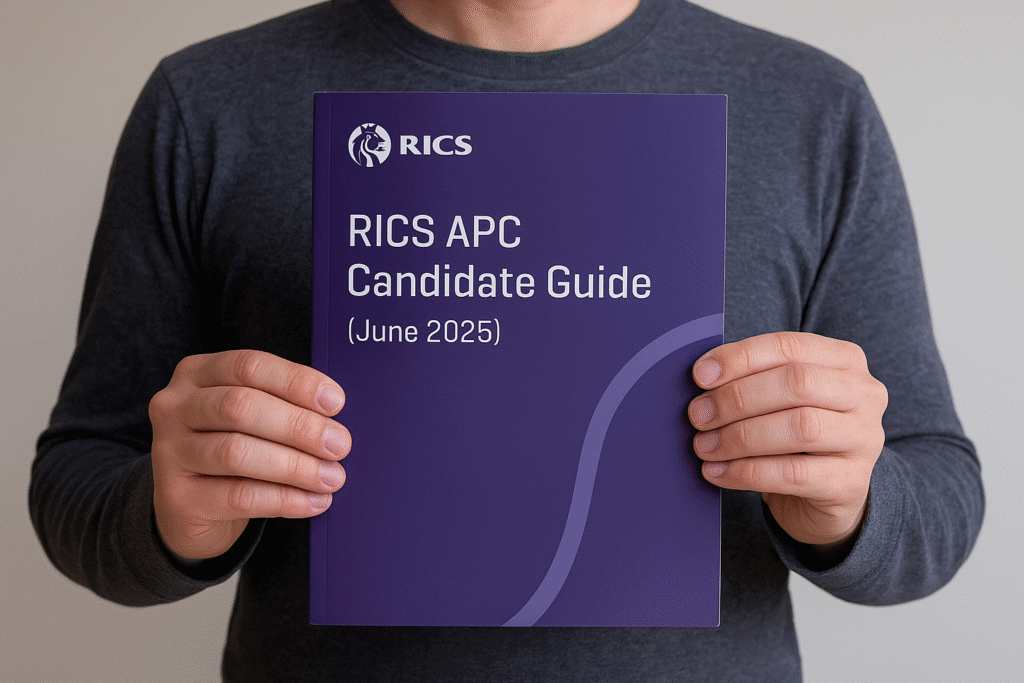
In June 2025, RICS released an updated version of its APC Candidate Guide, introducing a number of important revisions that every candidate should be aware of. These updates impact case study rules, use of AI, word counts, and the validity period of your submission documents. Let’s dive into the key changes and what they mean for your APC preparation.
1. Prohibition on Generative AI
One of the most significant changes is the explicit ban on using generative artificial intelligence such as ChatGPT to generate any part of your submission. While grammar or spelling checks are acceptable, the content must be your original professional work. RICS has warned they will apply AI‐detection tools to ensure compliance.
2. Stricter Case Study Word Count Rules
The new guide clarifies how the 3,000-word limit for your case study is evaluated. Headings, subheadings, and the main narrative (from introduction to conclusion) are now counted, while appendices, tables, charts, and photographs are excluded. You must state your word count at the end of your case study and indicate which items you considered in the count.
If your case study exceeds the permitted count, RICS reserves the right to cancel your Final Assessment Interview.
The updated guide provides clearer rules about which elements are included and excluded in the word count. For example:
Included: main narrative text, headings, subheadings
Excluded: table of contents, appendices, project name, date, confidentiality statement, charts and visual content placed in appendices
3. Summary of Experience Word Count Changes
The June 2025 Candidate Guide confirms that RICS is still enforcing a strict 1,500-word limit for mandatory competencies and a 4,000-word limit for technical competencies within the Summary of Experience. What has changed is the clarity on how the word count is measured and what is included.
The word count will be checked using Microsoft Word, with only the content entered under the column titled “Summary of Experience” being included. This means that any text written in that column, including references or citations, will count toward the limit. Importantly, the titles of competencies and the names of levels (which appear in the first two columns of the template) are not included in the count.
Candidates are also reminded that appendices should be used to support and enhance the case study, not to include irrelevant detail. The update reinforces the need for concise, competency-focused writing while making the word count rules transparent and consistent.
4. Clarified Diary vs Logbook Requirement
The guide reinforces that the APC diary is a working tool to record day-to-day experience, while the logbook is the document you submit. The diary itself is not required to be submitted.
5. Adjusted Enrolment Rules for Sandwich Placement Students
Candidates on a sandwich (placement) year in an RICS-accredited degree no longer need to enrol in advance—the placement year will automatically count toward your structured training requirement.
✅ What You Should Do Next
Download and study the June 2025 Candidate Guide in detail.
Review your case study draft to ensure compliance with the new word count rules and include the word count statement.
Ensure all your content is original work—avoid reliance on AI generation.
Move charts, tables, and visuals to appendices and reference them correctly.
Distinguish your diary entries (for personal use) and logbook entries (for submission).
Speak with your Counsellor to review your submission against the updated rules.
With these revisions, RICS aims to increase clarity, professionalism, and accountability in APC submissions. Staying compliant with the 2025 guide isn’t just good practice—it’s essential for your application to be accepted and assessed fairly.