Sustainability
| Question | Answer |
|---|---|
| Please explain your understanding of the term sustainability? | Sustainability as a principle aims to meet the needs of the present without compromising the ability of future generations to meet their own needs. Key principles of sustainability were set out within the Brundtland Commission Report titled ‘Our Common Future’ in 1987 which identified the need for sustainable development based around environmental protection, economic growth and social equity. It called for conservation of the environment and resources by gradually changing the ways in which we develop and use technologies. |
| What are the key principles of sustainability? | Key principles of sustainability are focused around social, economic and environmental factors. From a social standpoint, there is a requirement for society to build healthy communities with a sufficient number and diverse range of buildings for housing, commercial entities and infrastructure such as schools and hospitals. Economic factors also form part of the key principles of sustainability as there is a demand to build strong, responsive and competitive economies which requires the efficient use of availble land which is in limited supply. Environmental factors also play a key role in sustainability as there is a demand to enhance of our built environment sector without damaging the natural spaces and historical buildings that surround these. |
| What is the Paris Agreement? | The Paris Agreement is a legally binding international treaty concerning climate change. It was adopted by nearly every nation and came into affect in 2016. The goal of the Paris Agreement is to limit global warming to well below 2 degrees Celsius whilst targeting levels below 1.5 degrees Celsius when compared to pre-industrial levels. The agreement commits all major emitting countries to reduce their climate pollution. It also creates a framework for the transparent monitoring and reporting of each individual countries progress. |
| What is your understanding of the term ‘Green Roofs’? | A green roof is a roof covering that is partially or completely covered with vegetation that is placed over a waterproof membrane. Additional layers such as drainage layers, irrigation systems or root barriers may also be placed over the membrane. Rooftop ponds are an alternative form of green roof which are used to treat grey water. The vegetation, soil, drainage layer, root barriers and irrigation system are typically the key components of a green roof. Advantages of Green Roofs are that they absorb rainwater, provide extra insulation, increase biodiversity by providing habitats for wildlife, are aesthetically pleasing and lower urban air temperatures. |
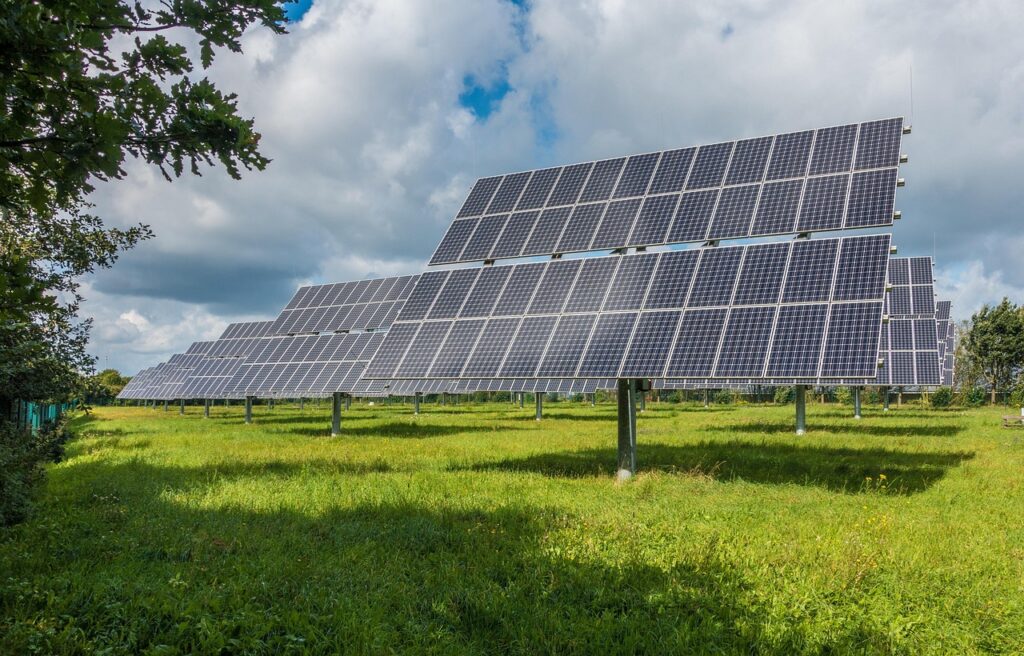
| What are Photovoltaics and how do they work? | Photovoltaics allow the conversion of sunlight into electricity. Sunlight contains energy known as photons. When photos hit solar modules within the solar panel they cause electrons to flow through the bottom layer. The movement of electrons generates electricity that flows to an inverter. The inverter converts DC electricity into AC that is then used to power the building. |
| What is a soakaway and how do they work? | A soakaway is a hole dug into the ground that is filled with coarse stone and rubble or plastic crates. It allows water to filter through it, and literally soak into the ground (away). A soakaway main purpose is to disperse the water produced by an impermeable area within the soil. The second aim of a soakaway is to help to recharge the aquifer. |
| Can you explain your understanding of the term carbon neutral? | Carbon neutrality is to have a balance between the carbon emitted and the carbon absorbed from the atmosphere in carbon sinks. This is an important measure of the impact that businesses and projects have on the environment and global warming. To date no artificial carbon sinks are able to remove carbon from the atmosphere at the levels required to offset global warming. |
| What is a carbon sink? | A carbon sink is anything that absorbs more carbon from the atmosphere than it releases – for example, plants, the ocean and soil. In contrast, a carbon source is anything that releases more carbon into the atmosphere than it absorbs – for example, the burning of fossil fuels or volcanic eruptions. |
| What is net zero carbon? | When carbon-neutral refers to balancing out the total amount of carbon emissions, net-zero carbon means no carbon was emitted from the get-go, so no carbon needs to be captured or offset. For example, a company’s building running entirely on solar, and using zero fossil fuels can label its energy as “zero carbon.” e.g. Masdar City in Abu Dhabi depends 100 % on renewable energy to cut carbon emissions and to improve the efficiency of its buildings. |
| What is the world’s only carbon free country? | Bhutan: the only carbon negative country in the world. |
| What is meant by the term Global Carbon Market? | This refers to an international system that allows the buying and selling of carbon emissions, allowances or credits. It is designed to help reduce global greenhouse gas emissions by putting a price on carbon to incentivise countries, companies and business entities to innovate and invest in cleaner technologies and help to reduce the global carbon footprint. |
| What sustainable initiatives are you aware of that are being implemented by the RICS? | The RICS SKA ratings encourages green codes of practice for commercial properties in UK. RICS has also launched the ‘Value the Planet’ campaign and committed to forming a climate change expert panel to implement the UN’s sustainable development goals. RICS has launched a Responsible Business Report filled with solutions for companies to operate in a greener capacity, regardless of the firm’s size. This includes introducing higher recycling rates and reducing energy, transport and water use where possible. |
| Please provide a high-level overview of the RICS Sustainability Report? | The RICS Sustainability Report 2024 provides a detailed analysis of the current state of sustainability within the built environment sector. The key findings included identification of an increase in market demand for green buildings however the adoption of sustainable building practices remains limited. High upfront costs and insufficient government incentives form significant barriers to widespread implementation of greener building methods. The report highlighted a need for consistent sustainability measurement across projects. Tools like the RICS Whole Life Carbon Assessment (WLCA) standard aim to address this issue by providing a unified framework for assessing and reducing carbon emissions throughout a building’s lifecycle. The RICS emphasises that the level of commitment and action needs to increase substantially to achieve 2050 net-zero targets. The RICS continues to play a pivotal role in shaping sustainability policies and standards globally. Its involvement in initiatives like the UN’s Buildings Breakthrough highlights the importance of harmonising sustainability standards worldwide. |
| What is an EPC? | Energy Performance Certificates were introduced in 2007 and are a legal requirement for a building to be sold, let or constructed in the United Kingdom. Once obtained an EPC is valid for 10 years. The most efficient built assets typically have the lowest fuel bills and are in band A. EPC’s are rated on a scale of A-G. The energy efficiency of the built asset along with the potential efficiency following improvements are identified. The EPC will also show the amount of CO2 emissions produced by the property in tonnes and will advise the amount this could be reduced by. |
| Please explain your understanding of the acronym MEES? | MEES stands for Minimum Energy Efficiency Standards. These are regulations in the UK that set minimum energy performance requirements for buildings, specifically for privately rented properties. Under MEES, properties in the private rental sector must meet at least an E rating on their Energy Performance Certificate (EPC) to be legally rented out. If a building is rated lower than an E, landlords are required to improve the energy efficiency of the property before renting it out, unless specific exemptions apply. The MEES regulations are part of the UK government’s broader environmental and sustainability agenda, aiming to ensure that properties are energy efficient and more environmentally friendly |
| Please explain your understanding of the term Urban greening factor? | The urban greening factor is a tool that evaluates and measures the amount of urban greening (vegetation cover and planting around buildings) to aid the appropriate planning of greening on future developments. The aim is to increase the amount of green cover around buildings and support its consideration at the design and outset of developments. Councils can develop their own targets with the plan for London being a target score of 0.4 for residential developments and 0.3 for commercial developments. |
| What are the most common environmental issues experienced on construction sites? | Environmental risks of construction sites can include:- Risks of Water Pollution. Air and Noise Pollution. High Energy Consumption and carbon emissions. Risk of land contamination. Damage to wild habitats. High Wastage production into landfill. Release of dangerous gases and chemicals. |
| Please explain your understanding of the term ‘Carbon Life Cycle’? | Carbon life cycle is a holistic view of the carbon footprint of a building. This considers the carbon impact from:- Material extraction. Manufacturing. Transportation. Construction works. Maintenance. Repairs or replacement of materials. Consumption of energy. Carbon use at the end of the buildings life. The represents a shift in simply selecting low carbon building products and encourages a longer term view during the building design process. |
| Please explain your understanding of the term ‘Negative Carbon’? | The reduction of an entity’s carbon footprint to less than neutral. This results in a net effect of removing carbon dioxide from the atmosphere rather than adding it. |
| Please explain your understanding of the term ‘Carbon Offsetting’? | Carbon offsetting results in a reduction of Green House Gas emissions or an increase in carbon storage. This is usually achieved through land restoration or the planting of trees that can compensate for emissions that occur elsewhere. |
| Please explain your understanding of the term ‘Placemaking’? | Placemaking is a wholistic approach to the development of public spaces that considers planning, design, implementation and management. This aims to deliver public spaces that offer unique value to their occupants such as:- A greater sense of belonging. Increased security. A unique atmosphere. Inspiration and experience. A sense of pride in community. This concept is thought to result in an improved quality of life to occupants, greater happiness, better work productivity and a possible increase in property values. |
| Please explain your understanding of Green mortgages? | A mortgage that rewards someone for buying or owning an energy efficient home by offering favourable terms than as standard. This typically result in lower interest rates or receiving cashback when you take out the mortgage. |
| What is a Green building? | Green Building is the practice of creating a built environment that is resource efficient in terms of energy, water, and materials whilst reducing building-related impacts on human health and the environment throughout the building’s life cycle, through better sitting, design, construction, operation, maintenance, change of use and deconstruction. |
| What are the different Green Building rating systems? | Al Safat – Dubai (Rating: Platinum, Gold, Silver, Bronze) Estidama (means Sustainability in Arabic) – Abu Dhabi – (Rating: Pearl rating system from 1 to 5 pearls) BREEAM (Building Research Establishment Environmental Assessment Method) Used in more than 70 countries (Rating: Outstanding 85%, Excellent 70%, Very Good 55%, Good 45%, Pass 30%, Unclassified < 30%) LEED – (Leadership in Energy and Environmental Design) – developed in US, most widely used in the world (Rating: Platinum 80+, Gold 60-79, Silver 50-59, Certified 40-49 points) GRIHA (Green Rating for Integrated Habitat Assessment) – Developed by TERI in India (Rating: 5* 91-100, 4* 81-90, 3* 71-80, 2* 61-70, 1* 51-60) IGBC (Indian Green Building Council) (Rating: Super Platinum 90-100, Platinum 75-89, Gold 60-74, Silver 50-59, Certified 40-49) |
| What is a contaminated land? | Contaminated land contains substances in or under the land that are actually or potentially hazardous to health or the environment. |
| What does RICS say about use of a contaminated land? | RICS says use only if it can be treated in a cost-effective manner. |
| What is waste heirarchy? | The waste hierarchy is a set of priorities for the efficient use of resources. The waste hierarchy is: 1. avoidance – including action to reduce the amount of waste generated by households, industry and all levels of government 2. resource recovery – including re-use, recycling, reprocessing and energy recovery, consistent with the most efficient use of the recovered resources 3. disposal – including management of all disposal options in the most environmentally responsible manner. |
| What are the Three R’s of Sustainability? | Reduce Reuse Recyle |
| What is EMS? | Environmental management system (EMS) refers to the management of an organization’s environmental programs in a comprehensive, systematic, planned and documented manner. It includes the organizational structure, planning and resources for developing, implementing and maintaining policy for environmental protection. The most widely used standard on which an EMS is based is International Organization for Standardization (ISO) 14001. The goals of EMS are to increase compliance and reduce waste. |
| What is the difference between Life-cycle costing and Whole life costing? | Life cycle costs are those associated directly with constructing and operating the building; while whole life costs include other costs such as land, income from the building and support costs associated with the activity within the building. The expertise of the construction industry is best placed to deliver life cycle costs, which its clients can then use to calculate whole life costs. |
| What is Carbon Footprint (CF)? | The total amount of Greenhouse gases produced to directly and indirectly support human activities, usually expressed in equivalent tons of carbon dioxide (CO2). |
| What is Ecological Footprint (EF)? | The ecological footprint measures human demand on natural capital, i.e. the quantity of nature it takes to support people and their economies. It tracks human demand on nature through an ecological accounting system. |
| What is a Greenhouse gas? | A greenhouse gas is a gas in an atmosphere that absorbs and emits radiant energy within the thermal infrared range. This process is the fundamental cause of the greenhouse effect. The primary greenhouse gases in Earth’s atmosphere are water vapor, carbon dioxide, methane, nitrous oxide, and ozone. |
| What are the various Green building solutions? | Waste management, recyclable materials, sustainable materials, building environmental management systems, water conservation, energy conservation. |
| Which are the Top LEED certified buildings in Dubai? | DEWA Government building, Al Qouz – LEED Platinum Fishing Harbours in Jumeirah, Um Suqeim – LEED Gold Dubai International Academic city, Phase 3 – LEED Silver |
| Give examples of Sustainability from your project. | 2. Use of Solar water heaters 3. Use of LED lights 4. Use of water-efficient sanitary fixtures such as dual flush systems, self-closing taps 5. Triple glazed windows with argon/krypton gas in between 6. Use of GGBFS in RMC |
| What are the different types of sustainable building materials? | Straw, Timber from forest certified to be sustainably managed, Bamboo, fly ash concrete, earth materials such as mud bricks, Recycled Steel, Recycled Glass |
| Why should we care about green building? | During the last 30-40 years we have been sensing the bitter experience of global warming, ozone depletion, resource depletion, energy scarcity, ecological toxicity, human toxicity, acid rains etc. These have alarmed, rather compelled the mankind to change the way they operate on the earth. Though we cannot avoid affecting the environment, the green buildings will aim and contribute towards minimising the environmental impact. It should also be emphasized that green buildings do not only contribute towards a sustainable construction and environment but it also brings lots of benefits and advantages to the building owners and the users. It contributes towards lower development costs, lower operating costs, increased comforts, healthier indoor environment quality, and enhanced durability and less maintenance costs. |
| How to eliminate wastage in Construction? | Lean construction Order the right amount of material. … Just-in-time (JIT) inventory system Use prefabricated building components. … Choose sustainable materials. … Properly store construction materials. … Use a professional waste clearance company. … Use a skip for proper segregation. … Use a site waste management plan. |
| What is Green Concrete? | Green Concrete is environmental friendly concrete which consumes less energy in its production and produces less carbon dioxide than normal concrete. Supplementary Cementing Materials like Ground Granulated Blast Slag (GGBS), Fly ash, Silica Fume and Fiber Glass will replace more than 64% of OPC when compared to normal concrete . |
| What is Kyoto Protocol? | Kyoto Protocol treaty was negotiated in December 1997 at the city of Kyoto, Japan and came into force February 16th, 2005. The Kyoto Protocol is a legally binding agreement under which industrialized countries will reduce their collective emissions of greenhouse gases by 5.2% compared to the year 1990. The goal is to lower overall emissions from six greenhouse gases – carbon dioxide, methane, nitrous oxide, sulfur hexafluoride, hydrofluorocarbons (HFCs), and perfluorocarbons (PFCs). |
| What is Global Warming? | Global warming is the term used to describe a gradual increase in the average temperature of the Earth’s atmosphere and its oceans, a change that is believed to be permanently changing the Earth’s climate. The increased volumes of carbon dioxide and other greenhouse gases released are reason for Global warming. |
| As Chartered Surveyor, how would you contribute to Sustainability? | 1) Re-use existing buildings: Reduces costs and is quicker. 2) Design for minimum waste: Make designs simple and with re-use in mind. 3) Aim for lean construction: Avoid over specification and use pre-assembly and repetitive components wherever possible. 4) Minimise energy in construction: Use minimum quantities and avoid energy intensive materials like aluminium and cement. |
| What is passive design? | ‘Passive design’ is design that works with the local climate to maintain a comfortable temperature in the home. Good passive design should reduce or eliminate the need for additional heating or cooling depending on your location and often relies on an active occupant to work properly. A passively designed home can deliver a lifetime of thermal comfort, low energy bills, and low greenhouse gas emissions. With passive design, building features such as orientation, thermal mass, insulation and glazing work together to take advantage of natural sources of heating and cooling, such as sun and breezes, and to minimise unwanted heat gain and loss. |
| What are the sustainable aspects that can be included during design stage of a project? | 1. Low-impact materials: choose non-toxic, sustainably produced, or recycled materials that require little energy to process 2. Energy efficiency: use manufacturing processes and produce products that require less energy 3. Locally available: choose materials which are available locally 4. Passive design: use passive design techniques to reduce the lighting and heating/cooling requirements |
| What is COP? | COP stands for Conference of the Parties and it often refers to the United Nations Framework Convention on Climate Change (UNFCCC). It is an annual meeting where member states of the United Nations convene to assess progress in dealing with climate change and make a plan for climate action within the guidelines of the UNFCCC. |
| Please explain your understanding of what happened at COP29? | COP29 which stands for Conference of the Parties 29 was held in Baku, Azerbaijan in November 2024 and focused on addressing the climate finance gap through the loss and damage fund, designed to support vulnerable nations. Some progress was made on working towards a global carbon market where the buying and selling of carbon emissions is facilitated to help reduce global emissions. This market would incentivise lower global emissions for companies, countries and other entities. By putting a price on carbon, it incentivises industries to innovate and invest in cleaner technologies, helping to reduce the global carbon footprint. Progress was also made on the NCQG or New Collective Quantified Goal on Finance to replace the previous $100bn Goal. This is intended to ensure that sufficient financial resources are mobilised to support developing countries to address the impacts of loss and damage from climate-related disasters. A consensus on the amount and scope of the funds required was discussed at COP29. |
| What is the difference between carbon and ecological footprints? | While the carbon footprint measures the emission of gases that contribute to global warming, the ecological footprint focuses on measuring the use of bio-productive space. |
| What is RICS environmental assessment method? | 1. SKA Rating is a RICS led and owned environmental assessment method, benchmark and standard for non-domestic fit outs. It helps landlords and tenants assess fit out projects against a set of sustainability good practice criteria, known as Good Practice Measures (GPM). 2. Whole life carbon assessment (WLCA) to measure whole-life carbon emissions, manage carbon budgets, reduce life cycle emissions and deliver a net-zero future for the built environment. |
| What is Green field, Brown field and Grey field development? | Greenfield: Buildings developed on previously undeveloped land are referred to as greenfield developments. Brownfield: Buildings developed on sites previously used for industrial or commercial purposes are termed brownfield developments. Greyfield: Greyfields are sites with existing commercial development and public utilities that over time have become obsolete, outdated, or underutilized. |
| What is a U-value? | Thermal transmittance, also known as U-value, is the rate of transfer of heat through a structure (which can be a single material or a composite), divided by the difference in temperature across that structure The better-insulated a structure is, the lower the U-value will be. |